US Signs Healthcare Funding Agreements With 35 Countries Under New "America First" Model
By Editorial Staff•Fri, Oct 2, 2026
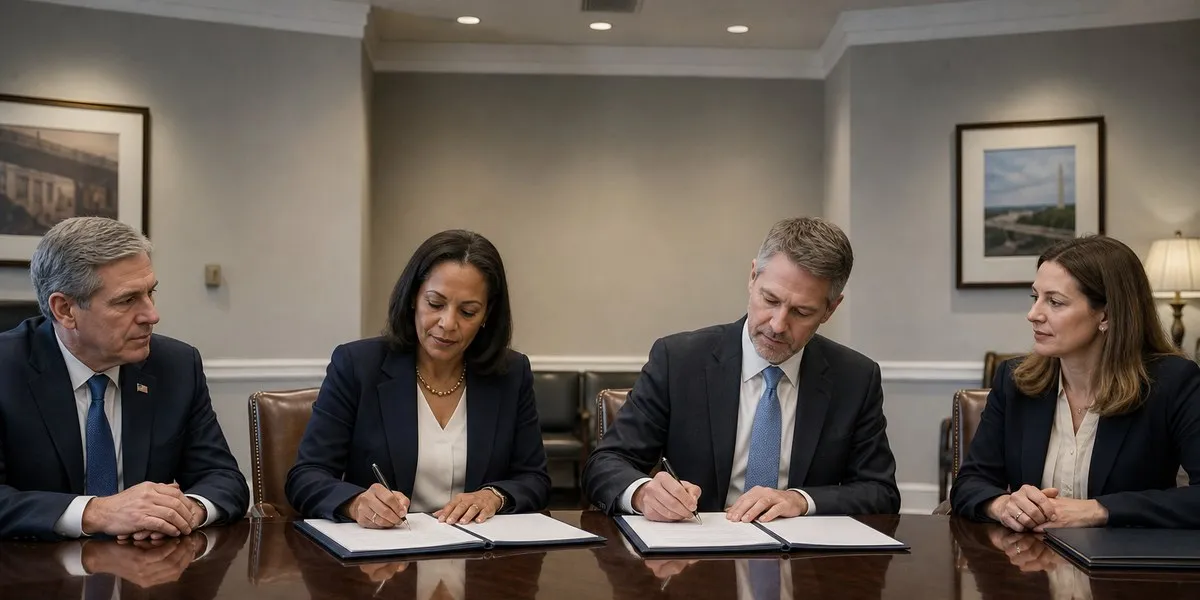
The Trump administration has begun a new phase of its global health strategy, with a revised funding model named the America First Global Health Strategy taking effect October 1. Under the new framework, countries seeking US healthcare funding must sign a memorandum of understanding outlining both the American contribution and the financial commitments required from the partner government.
According to NPR, the United States has signed these agreements with 35 countries so far, committing roughly $14 billion in healthcare investments over five years. Signatories include Nigeria, Rwanda, the Philippines, Tajikistan, Bolivia, and El Salvador.
How the New Model Works
The administration argues that requiring co-financing from partner nations will strengthen their long-term self-reliance and reduce dependence on US assistance. Tom Bollyky, director of the Global Health Program at the Council on Foreign Relations, described the approach as a more pragmatic shift in US aid policy, with the government seeking clearer returns for American taxpayers.
According to Bollyky, those returns could include preferential access to critical minerals or access to patient health data. The administration has defended data-sharing provisions by arguing they strengthen partner countries' ability to detect infectious disease outbreaks early and help prevent their spread to the United States.
Rwanda's agreement illustrates the model's structure: the US will provide $157 million, while Rwanda will contribute $70 million. As part of the deal, Rwanda also agreed to share patient data with the US and to recognize US Food and Drug Administration approvals for medicines used during disease outbreaks, without requiring separate review by Rwanda's own regulatory authority.
Some Countries Push Back Over Sovereignty Concerns
Not every country has agreed to the new terms. Ghana, Namibia, and Zimbabwe have all declined to sign memorandums, citing concerns over national sovereignty. Ghanaian President John Dramani Mahama said the proposed agreement would have required transferring patients' medical records and pathogen data to the US, along with recognizing the FDA as the final authority on medicine approvals within Ghana.
US Ambassador to Zimbabwe Pamela Tremont announced September 25 that the United States would end all global health funding to Zimbabwe following its rejection of the agreement. She said the US intends to shift its relationship with Zimbabwe away from healthcare funding and toward economic investment and trade instead.
Experts Weigh the Tradeoffs
Experts who spoke with NPR generally view coordination with national governments, along with their gradual assumption of healthcare funding responsibilities, as a reasonable long-term approach. However, they cautioned that implementing the model too quickly, combined with reduced US funding, could create serious transition challenges, particularly for countries with large populations at risk of HIV. NPR noted it remains unclear whether State Department funding will be disbursed on schedule under the new agreements.
#Medicine#medicine#US Foreign Aid#Global Health Policy#America First Strategy#Rwanda#Ghana#Zimbabwe#Healthcare Funding#Trump Administration#State Department#International Health Cooperation
Up next
Grassroots Groups Make a Last-Ditch Push to Unseat Rep. Nicole Malliotakis

You Can See Everything” Edges Out “Clayface” for No. 1 at Friday Box Office With $3.56 Million

Jennifer Lawrence on Her Breast Lift, “Baby Botox” and the Procedures She Won’t Do

Wales Make Four Changes for Women’s Rugby League World Cup Clash With Samoa

Florida Begins Notifying Victims of DMV Data Breach Tied to Stolen Law Enforcement Credentials

Finland Sees Assault Reports Climb More Than 10%, Putting 2026 on Track for a Record
Most popular
1