How a New York Influencer Became an Unlikely Force in the Fight Over Solar Farm
By Editorial Staff•Sun, Sep 27, 2026
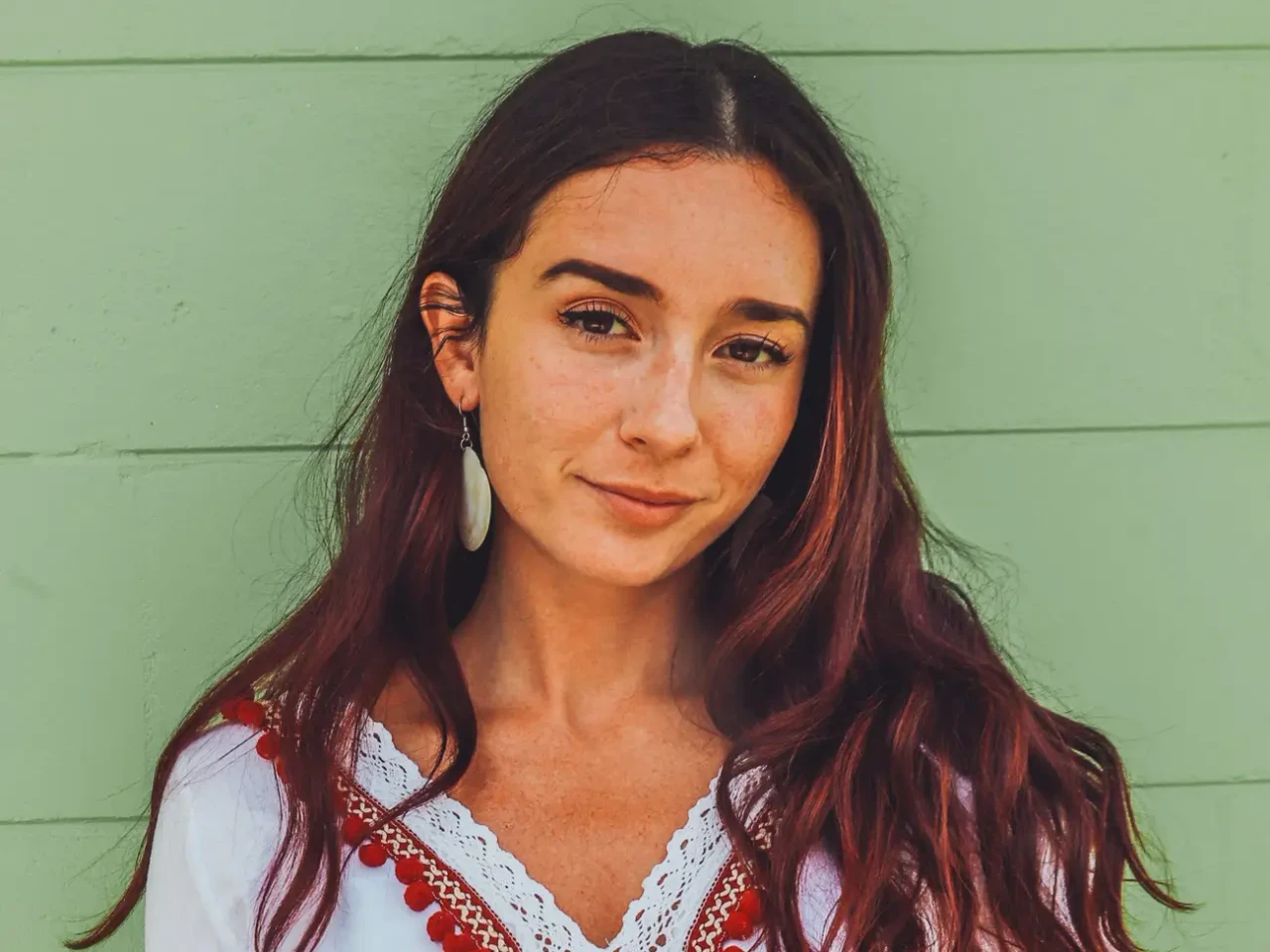
ALBANY, New York — In early July, US Agriculture Secretary Brooke Rollins sat down for lunch in the White House Mess with an unexpected guest: a New York social media influencer with no formal background in agriculture or energy policy, who has built a national following attacking solar energy projects on farmland.
Alexandra Fasulo, a former political firebrand known for embracing unfounded election fraud claims and posting inflammatory content online, has more recently toned down her rhetoric while building an anti-solar following exceeding 2 million people across platforms. Her posts have increasingly complicated New York policymakers' efforts and become a flashpoint in the state's gubernatorial race.
A White House Connection
Fasulo's White House visit came roughly a week after Rollins, EPA Administrator Lee Zeldin, and country singer John Rich — whom President Trump named special envoy for American landowners in June, a role focused on opposing solar and wind development on farmland — sent a letter to New York Gov. Kathy Hochul demanding answers to questions closely mirroring concerns Fasulo had raised publicly.
Rich has said Fasulo's posts first brought New York's solar expansion to his attention. Fasulo said she shared extensive information with Rich before the letter was sent, though she maintains she had no direct role in drafting it. Rollins later highlighted Fasulo's blog in a September 23 social media post celebrating the cancellation of a 300-megawatt solar project she and local officials, including Democratic state Sen. Pat Fahy, had opposed.
Fasulo described the experience as surreal, recalling on a conservative podcast how strange it felt to be eating lunch in the White House after nearly a year of persistent online advocacy.
Influence on New York's Governor's Race
Fasulo's warnings about foreign companies leasing New York farmland for solar projects have become talking points for Trump administration officials and Bruce Blakeman, the Republican nominee for New York governor. She appeared in a campaign ad alongside Blakeman, in which the Nassau County Executive pledged "no more solar on farmland" if elected. Blakeman has repeatedly echoed similar messaging throughout his campaign, appearing with Fasulo in Albany County, criticizing solar projects in Genesee County as a "total scam," and rallying alongside Sullivan County officials opposing a local solar project.
Fasulo argues the issue is inherently political, framing Hochul's current energy policy as supportive of what she describes as land destruction through solar and wind development.
A National Partisan Divide
The debate over where to build renewable energy has increasingly split along party lines nationally, with Republican gubernatorial candidates in California, Michigan, Wisconsin, and Tennessee similarly criticizing solar development on farmland. In New York, the issue adds another layer of tension between Hochul's "all of the above" energy strategy and the Trump administration, following earlier clashes over offshore wind even as the two sides have found some alignment on nuclear energy.
The State's Response
Hochul's administration has pushed back on concerns about solar's impact on farmland, noting in a July letter responding to the federal inquiry that state-permitted solar projects affect just 0.13% of the state's prime farmland. However, state officials have struggled to counter the broader online narrative shaping public perception, a gap the renewable energy industry has urged them to close.
A USDA spokesperson declined to detail the basis for the letter sent to Hochul's administration or discuss Fasulo's meeting with Rollins, but said the agency stands firmly behind the letter's concerns regarding the conversion of farmland into solar installations.
The renewable energy industry has responded by ramping up its own public messaging. A national solar trade group launched an advertising campaign in August aimed at countering Fasulo's narrative. Marguerite Wells, executive director of the Alliance for Clean Energy New York, said the industry can no longer rely solely on the traditional environmental movement's influence and must increasingly make its case on economic grounds, emphasizing the need for cost-effective energy production.
The Land-Use Debate
Solar power, while cheaper to build than many alternative energy sources, requires significantly more land than traditional power plants — a tradeoff at the center of Fasulo's objections and those of many upstate New York residents opposing local projects.
Fasulo purchased land in upstate New York after a hurricane destroyed her Florida home in 2022. Before focusing on solar development, she primarily posted about her seven-acre property, describing herself as a committed environmentalist and animal lover.
Her nonprofit, the American Land Rescue Fund, has raised more than $100,000 in less than a year and filed three lawsuits against the state, seeking public records and challenging siting rules for transmission projects. She frequently argues that renewable energy projects sited in rural communities damage the land's character while primarily benefiting New York City, framing the debate in starkly adversarial terms in her online posts.
Fasulo's Primary Target: State Solar Permitting
Fasulo has focused much of her criticism on New York's Office of Renewable Energy Siting (ORES), which was established under former Gov. Andrew Cuomo to accelerate renewable energy permitting. The office has issued permits for 30 solar projects and six wind projects to date. Fasulo has called for the office's dissolution and accountability for those responsible for creating it.
Upstate Republican lawmakers, local government associations, and affected residents have long opposed ORES's authority to override certain local laws. Fasulo's advocacy has drawn public praise from Rep. Elise Stefanik and Republican congressional candidates Kailee Buller and state Sen. Pete Oberacker. Some Democratic lawmakers have expressed related concerns as well — Rep. Josh Riley, facing a competitive reelection race, recently echoed similar criticism of the state's siting process.
Opposition to specific solar projects often crosses party lines. Jean Halloran, a New York City resident who also lives near a proposed project in Copake, said she typically votes for Democrats but views the state's solar siting process as flawed regardless of political affiliation, arguing that not every ORES-approved project can be assumed environmentally sound.
A Complicated Picture for Farmers
Fasulo's advocacy — and that of other solar critics — presents farmers in somewhat contradictory terms: as essential stewards of the land whose way of life is under threat, yet also seemingly incapable of independently evaluating land lease agreements.
For many farmers, solar and wind leases provide crucial financial stability and can free up land for expanding other agricultural operations. Rebekah Pierce, who operates a family farm in Clinton County and grazes sheep on solar sites, said the greater threat to farmland isn't solar development but farm bankruptcies and suburban real estate expansion.
Renewable industry representatives and state officials emphasize that farmland leasing decisions remain entirely voluntary. Jason Zehr, interim executive director of ORES, said private property owners retain full legal rights over their land and that farmers choosing to lease for renewable projects are doing so by choice, not coercion.
State data show that small, independent New York farms are disappearing at a faster rate than the national average. Between 2024 and 2025, the state lost 500 farms and 100,000 acres of farmland, according to federal data cited by Comptroller Tom DiNapoli's office, with the vast majority of losses affecting farms generating under $100,000 in annual revenue. Rising labor costs and volatile commodity prices have compounded these challenges. According to a separate DiNapoli report, solar facilities in agricultural districts accounted for just 0.5% of total farmland loss between 2017 and 2022 — a much smaller factor than other forms of development.
A History of Inflammatory Rhetoric
While Fasulo has largely avoided extreme political statements in her recent solar-focused advocacy, her earlier online history tells a different story. Before relocating from New York City to Florida, she served as an officer for the New York Young Republican Club and managed its social media accounts in 2019 and 2020.
On a now-deleted personal Twitter account, Fasulo frequently posted about the 2020 election, expressing deep skepticism about its results, describing Fox News as an "enemy of the people," directing sexualized insults at conservative commentator Megyn Kelly, accusing Democrats of treason, and referencing the possibility of civil war. In a November 2020 post, she wrote that anyone supporting policies she opposed was her enemy. In a separate now-deleted video, she made a comment suggesting then-New York City Mayor Bill de Blasio should be "eliminated from this planet."
When asked about these past statements, Fasulo characterized the inquiry as a character assassination attempt, saying she would continue her advocacy regardless of the scrutiny.
Concerns Over Threats and Safety
Some of Fasulo's followers have posted comments advocating violence against state officials, with some reported to state police. Zehr said the spread of misinformation tied to her advocacy has resulted in threats against agency staff, which he called inexcusable, adding that she bears some responsibility for that outcome.
Fasulo said she does not endorse violence and removes threatening comments when she sees them, while also noting she has received frightening messages herself related to her advocacy work.
Disputes Over Transparency
ORES holds public hearings, accepts public comments, and posts many project filings online. Fasulo has accused the agency of excessively redacting information related to endangered species affected by projects — a practice ORES officials say is required under state law.
Her scrutiny of the agency intensified during the permitting process for the Fort Edward Solar project near her property, which affects grassland habitat used by endangered bird species. The project's final permit conditions require the developer to submit a net conservation benefit plan to offset those impacts.
Fasulo has said she traveled to Albany twice seeking an in-person meeting with ORES officials and was turned away both times, later telling followers she never received a response from the agency. However, records obtained by POLITICO show she did receive an email from an ORES official following one of her visits, which included information about confidentiality provisions for viewing redacted material and an offer to schedule a meeting. Fasulo said she did not respond to that email and instead forwarded it to her attorney.
Fasulo has also claimed that solar developers illegally remove topsoil from construction sites, sharing photos and videos of construction activity as evidence. State permits, however, require topsoil to remain on-site throughout construction and be restored upon a project's eventual decommissioning, with an agricultural monitor required to be present during construction to ensure compliance. Wells, from the clean energy trade group, said such violations would be both illegal and impractical given the cost of removing topsoil, though she noted the claims remain difficult to refute in real time when raised publicly.
Looking Ahead
Fasulo said she intends to continue her opposition to solar development and scrutiny of state agency decisions, noting her influence now extends well beyond Albany through ongoing communication with Rich outside of her Washington visit. She said her core objection isn't to renewable energy itself, but to the scale of individual projects, arguing that smaller developments wouldn't have drawn her attention the way large, fenced-off installations spanning thousands of acres have.
#Breaking News#breaking-news#Solar Energy#New York Politics#Alexandra Fasulo#Kathy Hochul#Bruce Blakeman#Renewable Energy#Farmland Policy#Trump Administration#John Rich#Office of Renewable Energy Siting
Up next
Grassroots Groups Make a Last-Ditch Push to Unseat Rep. Nicole Malliotakis
You Can See Everything” Edges Out “Clayface” for No. 1 at Friday Box Office With $3.56 Million

Jennifer Lawrence on Her Breast Lift, “Baby Botox” and the Procedures She Won’t Do

Wales Make Four Changes for Women’s Rugby League World Cup Clash With Samoa

Florida Begins Notifying Victims of DMV Data Breach Tied to Stolen Law Enforcement Credentials

Finland Sees Assault Reports Climb More Than 10%, Putting 2026 on Track for a Record
Most popular
1