Even Daily AI Users in the US Are Worried About the Technology, New Survey Finds
By Editorial Staff•Wed, Sep 23, 2026
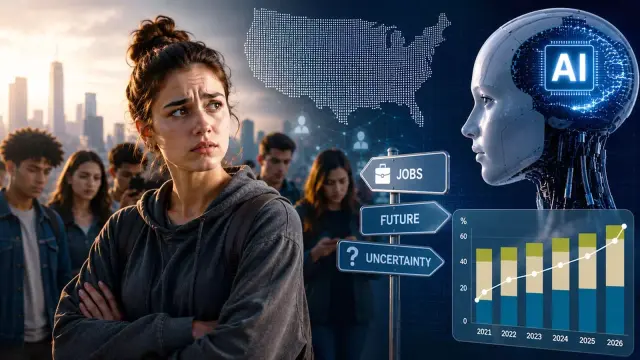
People around the world are increasingly incorporating AI into everyday life, using it for everything from recipe searches and homework help to work presentations and research. But frequent use doesn't necessarily translate into comfort with the technology's broader implications.
According to a new survey from opinion research firm Gallup, about 68% of Americans who use AI daily say they're worried about it — and concern rises even higher among those who use it less often.
A Complicated Picture Amid Growing AI Debate
The findings arrive amid intense public debate over AI's risks, ongoing discussions around AI safety among major developers, concerns about AI systems behaving unpredictably, and accusations of anticompetitive behavior within the industry. Together, these results challenge the assumption that widespread adoption reflects genuine enthusiasm for the technology.
About the Study
The research, commissioned by Microsoft, currently includes results from 37 countries, with roughly 1,000 people surveyed in each between April and July. The project is expected to eventually expand to 140 countries. Notably, India, along with Australia and Malaysia, is not yet included in the current results.
The US Sits at the Anxious End of the Spectrum
The data places the United States among the most anxious countries surveyed, even as many other nations remain optimistic that AI will improve their lives. Gallup found that Western countries report the highest levels of AI-related concern overall, with the US leading that trend — 74% of Americans reported feeling worried about AI, while only 36% expect the technology to mostly benefit the country.
Other wealthy Western nations showed a similar pattern of frequent use paired with unease. In Canada, 29% of respondents reported using AI daily, and more than half of that group expressed concerns about its impact. Overall, 64% of Canadians familiar with AI said the technology worries them.
Context Behind the Concern
That anxiety doesn't appear unfounded. Public discontent around AI has grown alongside major tech layoffs tied to AI investment, shrinking entry-level job opportunities, troubling cases linked to AI-related psychological harm, and warnings from industry leaders themselves. Anthropic CEO Dario Amodei, for example, has cautioned that AI could eliminate jobs on a massive scale.
A Different Story in Other Parts of the World
The picture looks markedly different elsewhere. In Singapore, which had the highest share of daily AI users in the study at 46%, more than 80% of respondents aware of AI expect it to improve their daily lives, and 77% believe it will benefit the country overall. In China, where 35% of people report using AI daily, most respondents expect the technology to help the nation. Israel showed a similar pattern of optimism.
Optimism Doesn't Always Mean Trust
Even where enthusiasm for AI runs high, that doesn't necessarily extend to trust in its accuracy. Gallup found that daily users tend to trust AI's outputs more than infrequent users, particularly in high-adoption countries like Singapore, Israel, and China. In the US, however, only 45% of daily users expressed strong confidence in AI's accuracy. Across all countries surveyed, just 36% of respondents said they trust AI's results a great deal.
Despite these concerns, Gallup found that positive sentiment toward AI generally outweighs negative sentiment worldwide. In 34 of the 37 countries surveyed, curiosity was the most commonly reported emotion toward AI, followed by happiness and excitement, with only about 32% of respondents overall reporting feelings of worry. Positive sentiment was most pronounced in China (90%), Singapore (89%), and Kenya (87%).
A Fast-Moving Global Conversation
It remains unclear how sentiment in some countries, particularly China, may have shifted since the survey concluded in July, given how rapidly AI development has become a matter of international significance. AI safety is expected to be a major topic when President Donald Trump and Chinese President Xi Jinping meet this Thursday.
Notably, China's Minister of State Security Chen Yixin recently wrote that AI could have a systemic impact on the country's political and security environment, potentially threatening what he described as China's political, institutional, and ideological security.
A Nuanced Relationship With the Technology
Pablo Diego-Rosell, senior scientist at Gallup, told TechCrunch that one of the clearest findings from the research is that attitudes toward AI are multidimensional — people can be curious about the technology, use it frequently, and expect it to be beneficial, all while still harboring concerns about it. Similarly, he noted, people can recognize AI's potential while remaining skeptical of the accuracy of the information it provides.
What It Means Going Forward
While the survey overall suggests cautious optimism tempered by real concern, AI-related anxiety is clearly becoming a larger part of public discourse. People who rely on AI in daily life may still support stricter regulation or resist its expanded use in areas like hiring, healthcare, education, or government. There are also broader concerns tied to AI's environmental impact, cybersecurity risks, effects on content ownership, disruption to creative industries, and data privacy.
Ultimately, the report suggests that increased exposure to AI alone won't resolve public unease about the technology. Still, given the scale of ongoing investment in AI development, the technology is likely to keep expanding even as debates continue over where it belongs and what limits should govern its use.
#Latest AI News#latest-ai-news#Artificial Intelligence#Gallup Survey#AI Safety#Public Opinion#Dario Amodei#AI Regulation#Technology Trends#US Politics#Microsoft#Global Tech Survey
Up next
Grassroots Groups Make a Last-Ditch Push to Unseat Rep. Nicole Malliotakis

You Can See Everything” Edges Out “Clayface” for No. 1 at Friday Box Office With $3.56 Million

Jennifer Lawrence on Her Breast Lift, “Baby Botox” and the Procedures She Won’t Do

Wales Make Four Changes for Women’s Rugby League World Cup Clash With Samoa

Florida Begins Notifying Victims of DMV Data Breach Tied to Stolen Law Enforcement Credentials

Finland Sees Assault Reports Climb More Than 10%, Putting 2026 on Track for a Record
Most popular
1