Bruce Blakeman Wants to Be New York's Governor — But Has Offered Few Policy Specifics
By Editorial Staff•Fri, Oct 2, 2026
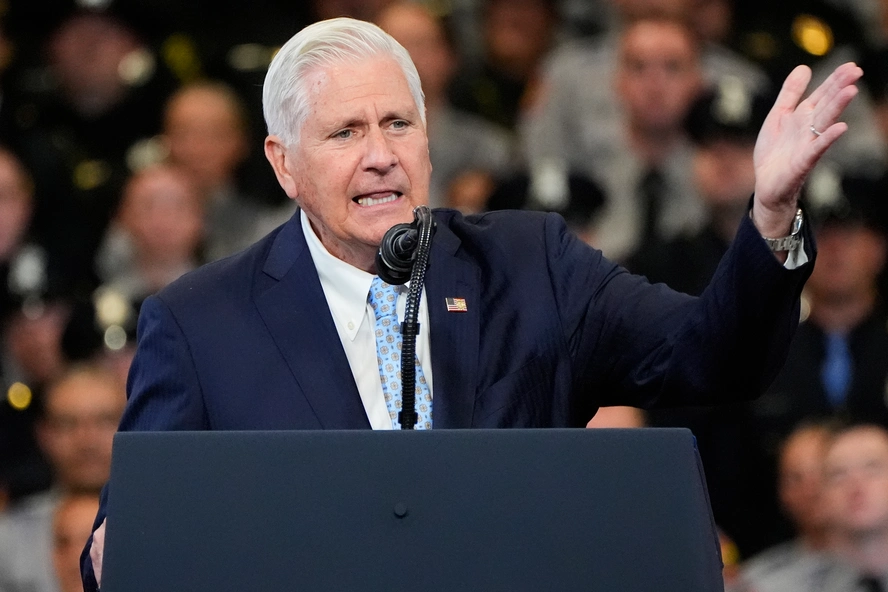
ALBANY, New York — Republican Bruce Blakeman wants to become New York's next governor, but with a month until Election Day, he still hasn't offered voters much clarity on what he'd actually do with the job.
The Nassau County executive doesn't have a policy section on his campaign website. Rather than laying out detailed proposals, he's built his campaign primarily around attacks on sitting Gov. Kathy Hochul and her ally, New York City Mayor Zohran Mamdani.
A Campaign Built on Attacks Rather Than Policy
When asked in August about his plan to address housing costs — a top concern among New York voters — Blakeman pivoted quickly to ideological criticism, dismissing what he called the failed socialist approach of Hochul and Mamdani rather than offering specifics. That exchange largely captures the tone of his campaign, which has remained focused on labeling Hochul the "Worst Governor in America" and characterizing Mamdani in sharply personal terms.
Blakeman leads a Republican ticket this cycle that includes several competitive House races with implications for control of Congress. A close ally of President Trump, with whom he's expected to campaign next week, Blakeman has generally trailed in polling, though his numbers have outperformed those of 2022 GOP gubernatorial nominee Lee Zeldin, who ultimately won 47% of the vote in a state that hasn't elected a Republican statewide in nearly 25 years.
Vague Promises on Taxes and Spending
Despite the opportunity presented by this year's political climate, Blakeman's policy platform remains largely undefined. He's criticized numerous laws backed by Hochul, each of which would require approval from the Democratic-controlled state Legislature to repeal. His own agenda centers mainly on promises to cut taxes and utility bills, though achieving either would require tens of billions of dollars in budget cuts — and school funding and health care represent the largest portions of state spending. Blakeman's campaign has declined to specify what programs would face cuts, even while suggesting he'd like to increase funding for schools and health care.
E.J. McMahon, who helped craft former Gov. George Pataki's tax cut proposal, was unimpressed by Blakeman's plan, describing it as lacking in detail. Blakeman's proposal includes eliminating taxes on the first $50,000 earned by individuals and the first $100,000 earned by married couples, along with an additional 10% income tax cut.
The Budget Math Doesn't Add Up, Critics Say
State Senate Finance Chair Liz Krueger estimated the resulting revenue loss could reach $40 billion, noting the real impact would likely be far higher given that much state spending is matched by federal funding. She explained that cutting $10 billion from a program like Medicaid could mean losing an additional $12 billion in federal matching funds, pushing the total cut closer to $22 billion — and said achieving Blakeman's full vision could require roughly $60 billion in cuts overall, a scale she called unrealistic to deliver without significant harm to residents.
These cuts would also need to happen against the backdrop of an already strained budget — the state comptroller's office projects a $32 billion shortfall over the next three years.
Blakeman has argued that cutting tens of billions from the budget shouldn't be difficult, pointing to New York's budget being twice the size of Florida's and suggesting the difference reflects waste and inefficiency rather than differences in cost of living, population, or state services.
Shifting Numbers, Few Specifics
Blakeman first introduced his tax cut plan in April. When asked repeatedly for details on how the cuts would affect the budget or how he'd balance the state's books, his campaign largely restated public talking points rather than offering new information. He now estimates the plan's cost at $35 billion, without detailing a clear funding mechanism. His campaign has pointed to eliminating unspecified "fraud and abuse" and ending spending on undocumented immigrants — a portion of the budget that represents only a small fraction of what would be needed to achieve his stated savings.
At the same time, Blakeman has made comments suggesting he'd like to significantly expand state spending in other areas, including infrastructure, education, and health care. He's also running ads promising to double the state's property tax rebate program and has called for opening additional prisons.
A Departure From Past Campaigns
This approach marks a significant shift from how previous non-incumbent gubernatorial campaigns have operated in New York. Former Gov. Andrew Cuomo released detailed policy books ahead of his 2010 campaign outlining his positions on a wide range of issues. Pataki's 1994 campaign included a more modest $5.6 billion tax cut proposal, paired with specific plans to reduce the government workforce by a third, sell state property, and detailed multi-year fiscal projections.
Utility Bill Promises Face Similar Scrutiny
Beyond tax cuts, Blakeman frequently promises to cut utility bills by 50%, which would give New York the lowest energy prices in the country. He argues this is achievable by eliminating certain taxes and allowing hydrofracking in the Southern Tier region, framing the move as ending what he calls a "green energy scam."
Energy experts remain skeptical. John Howard, a former state energy regulator appointed under Cuomo, described the promise as simple to state but nearly impossible to deliver. Blakeman's claim rests on the assertion that only 30% of a typical energy bill goes toward actual energy costs, with the remainder trimmable — but in reality, most of the remaining costs go toward grid maintenance and repair. Only about 18% of a typical upstate electric bill is tied to state mandates or taxes, meaning even eliminating all of them wouldn't come close to a 50% reduction.
Blakeman has also pointed to lower electricity costs in neighboring Pennsylvania as evidence that natural gas extraction would meaningfully lower bills. However, because fossil fuel prices are largely determined by global markets, increased domestic extraction tends to have minimal impact on local rates — a lesson Pennsylvania residents have already experienced, as promises that fracking would lower utility bills there largely didn't materialize. Notably, residents in Tioga County, New York currently pay less for electricity per month than residents in the neighboring Pennsylvania county of the same name.
When asked for specifics on how his plan would produce an immediate 50% reduction in utility bills, Blakeman's campaign repeated its existing talking points and added a pledge to redirect $2.4 billion from an unspent state energy fund directly to ratepayers as an immediate credit — a proposal similar in structure to existing Hochul-backed rebate programs that Blakeman has criticized as a political gimmick.
Legislative and Logistical Hurdles
Like many of his predecessors, Blakeman would face significant obstacles getting his proposals approved. Hydrofracking remains illegal in New York and would require a change in state law to permit. Other policies he's criticized — including bail reform, limits on solitary confinement, congestion pricing, and the state's restrictions on local cooperation with ICE — would similarly require approval from both chambers of the Legislature, where Democrats have controlled the Assembly since 1976.
Similar complications apply to other ideas Blakeman has floated on the campaign trail. Asked in August how he'd address homelessness, he suggested converting Rikers Island into a shelter space. However, the island is controlled by New York City government, not the state, meaning Blakeman would likely need Mamdani's cooperation to implement such a plan — a scenario that appears unlikely given the tone of their public exchanges.
Confidence in Confrontation, Skepticism From Critics
Blakeman has repeatedly expressed confidence in his ability to pressure the state Legislature into supporting his agenda, an approach that has proven difficult for previous governors. He's expressed similar confidence regarding Mamdani, telling the Republican Jewish Coalition in May that he would discipline the mayor as he would a child if necessary.
Critics argue that approach falls short of what's needed from a candidate seeking an office responsible for producing a roughly 4,500-page budget proposal annually. Matthew Aracich, president of the Building and Construction Trades Council of Nassau and Suffolk Counties, said Blakeman has offered no real plan, describing his campaign as built on sound bites and reflexive opposition to Hochul's agenda rather than a substantive alternative vision.
#Donald Trump#donald-trump#Bruce Blakeman#New York Governor Race#Kathy Hochul#Zohran Mamdani#NY Election 2026#State Budget#Tax Policy#New York Politics#Energy Policy#Republican Party
Up next
Grassroots Groups Make a Last-Ditch Push to Unseat Rep. Nicole Malliotakis
You Can See Everything” Edges Out “Clayface” for No. 1 at Friday Box Office With $3.56 Million
Jennifer Lawrence on Her Breast Lift, “Baby Botox” and the Procedures She Won’t Do

Wales Make Four Changes for Women’s Rugby League World Cup Clash With Samoa

Florida Begins Notifying Victims of DMV Data Breach Tied to Stolen Law Enforcement Credentials

Finland Sees Assault Reports Climb More Than 10%, Putting 2026 on Track for a Record
Most popular
1