10-Year Treasury Yield Hits 5% for First Time Since 2007, Signaling Higher Borrowing Costs Ahead
By Editorial Staff•Mon, Sep 14, 2026
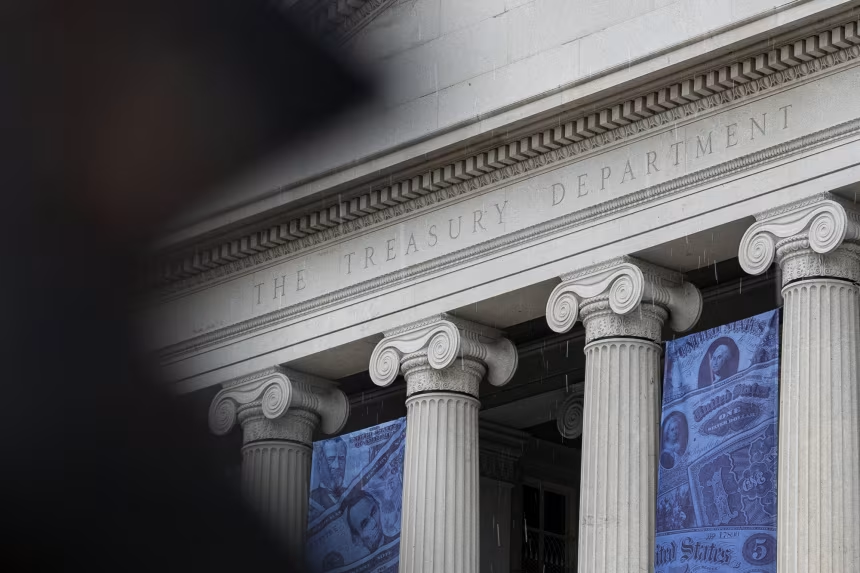
NEW YORK — The 10-year Treasury yield crossed 5% on Monday, a level rarely seen since 2007, marking a milestone in a global bond sell-off that's driving up borrowing costs for consumers, businesses, and governments alike.
The benchmark yield briefly touched this level in 2023, but Monday's move pushes it further into territory not sustained in nearly two decades. The climb comes despite efforts by Treasury Secretary Scott Bessent to calm jitters in the bond market.
What's Driving the Sell-Off
The nearly $32 trillion US Treasury market has been under pressure as investors weigh a combination of factors: rising energy prices, expectations that central banks will raise interest rates further, uncertainty stemming from the war with Iran, and concerns over unchecked government spending and mounting debt. Bond prices have fallen in tandem, pushing yields higher — a dynamic playing out not just in the US but across global markets, with yields in Germany, France and the UK also reaching multi-year or multi-decade highs.
The 10-year yield started the year at 4.15% and briefly dipped below 4% in February. Once the war with Iran began, yields reversed sharply and climbed steadily, reaching 4.5% in May before hitting the 5% mark on Monday.
What It Means for Borrowers
Because the 10-year yield serves as a benchmark for borrowing costs throughout the economy, its rise tends to push up rates on mortgages, auto loans, and other forms of consumer credit.
The housing market has felt this most acutely. Mortgage rates track the 10-year yield closely, and as the yield has climbed this year, the average 30-year fixed mortgage rate has followed — rising to 6.76% last week, up from 6.15% at the start of the year, and reaching its highest level in more than a year.
What It Means for Stocks
Rising yields can also affect how investors value stocks, since higher yields on safer government bonds can pull money away from riskier assets and complicate projections for corporate earnings.
Whether that pressure translates into a stock market decline often depends on how the yield increase unfolds. Sharp, volatile spikes — like the one triggered by President Trump's tariff announcement in April 2025, which sent the dollar falling and stocks tumbling alongside a yield spike — tend to rattle markets more than gradual increases. This year's climb has been steadier, and the S&P 500 remains up more than 10%, suggesting strong corporate earnings have so far offset concerns about higher yields.
Still, analysts warn that a slower economy or weaker earnings could make elevated yields a bigger threat to stocks going forward. John Higgins, chief economic adviser for financial markets at Capital Economics, said in a note that some view the 5% threshold as a potential tipping point for market instability, though he isn't convinced it holds special significance. He added that higher Treasury yields nonetheless pose risks to the sustainability of US public finances and to equities more broadly.
A New Era of "Normal for Longer" Rates
Analysts say this year's climb in global yields isn't entirely unexpected and may reflect a broader shift away from the ultra-low interest rate environment that followed the 2008 financial crisis. Central banks around the world slashed rates to historic lows in the years after that crisis, but that era began unwinding in 2022, when banks raised rates aggressively to combat inflation fueled by the pandemic and Russia's invasion of Ukraine.
Five years ago, the 10-year yield stood at just 1.3%. Luis Alvarado, co-head of global fixed income strategy at Wells Fargo Investment Institute, told CNN that the firm has been telling clients to expect "normal for longer," meaning the forces driving yields higher are likely to persist rather than reverse.
The upward push in global yields accelerated after the war with Iran began, with 10-year yields in Germany, France, and the UK all reaching their highest levels in more than a decade. Higher energy prices have added to inflation pressures, prompting central banks to respond with rate hikes — the European Central Bank raised rates last week for the second time this year. Underlying much of the move, analysts say, is growing investor skepticism about government budgets and expanding deficits worldwide.
#Real Estate#real-estate#Treasury Yields#Bond Market#Federal Reserve#Mortgage Rates#US Economy#Interest Rates#Stock Market#Inflation#Scott Bessent#Global Markets
Up next

Grassroots Groups Make a Last-Ditch Push to Unseat Rep. Nicole Malliotakis

You Can See Everything” Edges Out “Clayface” for No. 1 at Friday Box Office With $3.56 Million

Jennifer Lawrence on Her Breast Lift, “Baby Botox” and the Procedures She Won’t Do

Wales Make Four Changes for Women’s Rugby League World Cup Clash With Samoa

Florida Begins Notifying Victims of DMV Data Breach Tied to Stolen Law Enforcement Credentials

Finland Sees Assault Reports Climb More Than 10%, Putting 2026 on Track for a Record
Most popular
1